Back

A family's faith and fortitude With community's help, Drew Brodie recovers

Sunday, May 28, 2006
BY GEOFF LARCOM
News Staff Reporter

Claire Brodie wriggled and laughed as she tried to avoid the ticklish touch of her big brother, Drew, a former high school athlete who still loomed tall as he sat in his wheelchair with his sister on his lap.

A few months ago, any chance for playtime between the siblings was unthinkable, as Drew battled for his life against a mysterious illness that initially baffled doctors, kept him in the hospital for 11 months and forced him to miss much of his senior year in high school.

But life is happily - miraculously - returning to a semblance of normalcy for the Brodie family these days at their home in Scio Township.

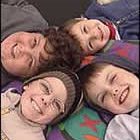
Suzette Brodie and her four children - Drew, 19; twins Sean and Devon, 15; and Claire, 11 - sit around the family room and watch old ``Seinfeld'' videos. They laugh and eat snacks. The twins wrestle each other and Claire hangs close to Drew.

The growing familiarity of it all carries an undercurrent of joy after an agonizing year in which Drew was hospitalized at the University of Michigan Medical Center and nearly died of a rare immune disorder. He was put into a medically induced coma for two months, then last summer had to work hard to regain the strength necessary to undergo a bone marrow transplant - provided by Sean - in November.

``Drew's recovery has been nothing short of extraordinary,'' said Dr. Valerie Castle, chairwoman of U-M's Department of Pediatrics and one of the many doctors who treated Drew over the past year.

Family friend Ehren Dirksen, part of a vast support network for the Brodie family, calls it ``an incredible story of strength, faith, patience and community.''

``This family changes the lives they touch,'' Dirksen said.

The story of the Brodie family's battle against adversity doesn't start with Drew's illness.

In July 2004, Drew's father, Joe, died of prostate cancer at the age of 48.

The death hit Drew the hardest, Suzette said. He was the oldest child and he realized how quickly things that you love can be taken away. ``I just feel different from my friends,'' he had told his mother at the time. ``Like I know so much more. Things that they find funny I don't find funny.''

But less than a year later, while the family was still grieving for Joe, a second crisis arose that was to bring even more stark perspective about life's challenges.

As 2005 began, Drew was a 6-foot-4-inch lacrosse player with a winning smile and bright, alert eyes. A senior at Pioneer High School, he wore his wavy hair long and tousled, in the mold of a fit yet stylish teenage athlete.

In February 2005, Drew was diagnosed with mononucleosis and stayed home a week before being admitted to U-M Hospital for dehydration. He spent three weeks recovering.

Things seemed to improve, and Drew went on a spring break cruise with several friends and their fathers. But he came back and ``crashed at that point,'' Suzette Brodie said.

Drew was taken to the hospital on April 2, 2005, and the emergency room physicians were alarmed enough to admit him. His blood pressure was seriously low and he was very dehydrated.

Castle had been working on the oncology unit when a resident intern approached her and said they could use her input on a really difficult case on the general residency floor. She said she was struck by how sick Drew was and how frightened he seemed - she could see it in his eyes - along with the fact that by now the mononucleosis should have run its course. He was moved to the intensive care unit on April 3.

By April 4, Drew's organs began shutting down and his condition deteriorated dramatically. He was suffering from heart arrhythmia and kidney and liver failure, with dreadful abnormalities in his blood cell count.

He was put on life support for about a week. At that point, doctors said, Drew was living minute to minute. Suzette, who draws strength from her Catholic faith, called in a priest.

Suzette had been in the midst of grieving for Joe, and now suddenly she found herself in a much more urgent situation. Drew would command nearly all of her time, her prayers and her emotional energy. ``The grieving process took a back seat,'' she said.

As Drew struggled, ``everything came to a halt,'' she said. ``We were hoping he'd make it through the next day. But then, with what damage?''

Castle and a wide variety of other doctors had conferred as they tried to pinpoint the source of Drew's rapid decline.

The ultimate diagnosis was X-linked Lymphoproliferative Disorder, or XLP, an extremely rare and deadly immune disorder that normally affects only very young males. It's normally inherited through a mother's genes, yet tests showed that Suzette was not a carrier. Doctors say that Drew's disease had arisen from a spontaneous mutation.

Drew also had Hemophagocytic Lymphohistiocytosis, or HLH, a condition in which his immune system went into overdrive in trying to fight the virus. But instead, his immune system was attacking his organs and healthy tissue.

Constant love

The only cure was a bone marrow transplant, and Drew would need to rest and regain strength for months before that procedure.

He was heavily sedated and put in a medically induced coma for two months so his body could rest and the medicine could do its job of eliminating the HLH. During the coma, he never opened his eyes, though friends and family would continually go up to him and talk lovingly into his ear. He came out of the coma on May 21, 2005 - two days before his 18th birthday.

Drew faced a long road back. The nerve damage from his illness had taken away his speech and deconditioned his body. He began a series of treatments and painstaking rehab during what would be a long stay at C.S. Mott Children's Hospital.

Pam Kangas, a U-M nurse who frequently took care of Drew while he was on the hematology floor, recalled that in late May he could only shift his gaze to say yes or no. When she first met Drew, she had a hard time going into his room, he seemed so devastated. Yet she soon came to know his playful nature, and in the months to come they would periodically realize how far he'd progressed in various activities, such as getting into a bathtub.

Because the circulation to Drew's extremities had been reduced, they became hardened and black. Gangrene forced doctors to amputate his toes and the tips of eight fingers on July 5.

Drew's appearance also had changed dramatically. At first he had a trachea, a feeding tube, a central IV and splints and dressings on his hands and feet. Suzette visited and prayed every day, but brought the kids only sporadically.

Little sister Claire didn't care how her brother looked. She wasn't put off by all that stuff, and on visits she would climb up right into his lap. ``She saw right through it to see Drew,'' Kangas said.

The amputation surgery reinforced for Drew how his life had changed forever. For Suzette, the process of letting go of Joe had ended abruptly, and not by her own choice. But she drew on her experiences in having cared for her husband when she had to be strong for her children and for herself.

Yet amid such jolting life changes, Drew, Suzette and the other children continued to benefit from the love and resolve of family, friends and others in the community. ``We felt it every day in this boy's room,'' Castle said of all the support.

In June, Sean and Devon accepted Drew's diploma at Pioneer's graduation ceremonies at Crisler Arena, drawing a standing ovation from the crowd.

And from that dramatic low point in April, the summer and fall produced a series of small yet heartening triumphs as Drew gradually regained function.

Suzette started a hospital Web site diary (www.carepages.com) in June and began chronicling Drew's recovery.

On July 28, she wrote of a Wednesday afternoon when a friend, Laura Crowley, brought the family's dog, Bailey, to an outside hospital door for a visit. It was a happy and emotional time for Drew, who hadn't seen the dog since April. Later that day, in rehab and with some assistance, he played the card game Uno against Suzette and Dirksen. ``These are all little things, but together have lifted Drew's spirits and brought back his smile that disappeared after surgery,'' Suzette wrote.

Later in the summer, on Aug. 28, upon returning from a quick family getaway up north, Suzette told of Drew regaining his ability to speak.

``Before I left, I told Drew that I wanted him to keep up the good work because he was doing so well - going downstairs to rehab every day, going out in the courtyard every night - but I was not prepared for his improvements when I walked into his room on Friday night,'' Suzette said. ``He was watching a movie and turned to me, smiled, and said, `Hi Mom. I missed you.'

``The second thing he said was, `I can talk now.' And then, `I can eat anything.' ... We stayed past midnight, talking, talking and laughing.''

A fitting donor

On Nov. 30 came the long-awaited bone marrow transplant, made possible by a tissue match by just one member of the family - Drew's brother Sean. ``Are you telling me we have a perfect match?'' Suzette recalled joyfully asking doctors as she read the test results.

Like the other Brodie children, Sean didn't like big needles, but he never complained at the prospect. ``I didn't feel anything,'' Sean said of the operation. ``I wanted to do anything I could to help Drew.''

The procedure helped to seal a special bond between the brothers. This lacrosse season, Sean took Drew's number, 32, and switched to defense, Drew's old position. ``It is so wonderful and fitting that Sean is his donor,'' Suzette said.

Support from friends and the community had continued to pour in. Laura and Steve Crowley held a party at Steve's business, Rick's American Cafe, to raise money and honor Drew.

A jewelry sale was held at Angelo's Restaurant. The Huron Hills Baptist Church donated proceeds from its annual 5K run to Drew's rehab. A group of local contractors, led by Jeff Mundus, banded together to build a ramp to the Brodies' front door. Liberty Athletic Club donated a membership so Drew could work out with that club's personal trainers.

In October, an organization called Suite Dreams Project, a group that designs new bedrooms for children who have serious illnesses, installed cabinets, a desk area and a new bathroom with a shower for Drew. The downstairs area now stands as the ultimate teen hangout, adorned with posters of Drew's rock music idols, including Pink Floyd, Led Zeppelin and John Lennon.

The return home

On March 1, Drew returned home after 332 days in the hospital and about $2 million in insured hospital expenses. Cars lined the street and people lined the driveway, making a tunnel with their arms for Drew to roll through in his wheelchair.

The friends and family stood and cheered as Suzette wheeled Drew up his newly created ramp and turned him around in the doorway of the house. Drew smiled, a big, ear-to-ear kind-of-smile.

Later that night, Drew and Suzette savored the presence of his friends back in the house. Claire, true to form, remained by Drew's side the whole time. ``Thanks to you for March 1st,'' Suzette wrote on the Web site. ``Your prayers brought Drew home.''

Andy Herner, Drew's physical therapist in U-M's Adult Neurological Rehabilitation Program, started working with him on stairs in mid-March. Drew now goes down to his basement lair, descending the stairs backward.

When he began working with Herner, Drew could only walk about 30 feet. Now he can cover more than 600. He alternatively uses a walker and his wheelchair and is beginning to walk on his own more often.

``He's one of those patients who inspire me, too,'' Herner said. ``Everything he does takes a lot of effort, such as speaking or getting in and out of bed. In our lives, we take a lot of things for granted. He's always given me everything he's got.''

Said Kangas: ``He was so patient throughout the whole thing. He's still a young guy, but old enough to know what was going on. He handled it with so much grace.''

Several weeks ago, on April 7, Drew reached another milestone. Tests showed that the bone marrow transplant was a success. No longer did Drew have XLP. His own immune system had been completely replaced by Sean's.

``Things just keep getting better,'' said Suzette, a teaching assistant with hearing-impaired children at Abbot Elementary School in Ann Arbor.

She can think more about Joe now, about how happy he was and how it was all just taken from him. Yet she said she's never grown bitter or despairing over the events of the last three years. ``I just have this feeling that God's plan for us is unveiled slowly to us over the many, many years, which is what we call our life,'' Suzette said. ``Whatever happens, God will still be in my life. I will still have many blessings despite these devastating things that have happened.

``I don't go around thinking, `What if, what if? Why Drew?' Drew will get better. Our life will go on.''

Nobody will predict the long-term future for Drew, but Castle said doctors are extremely optimistic about his development as he grows stronger each week. ``Anybody that thinks that they can predict neurologic outcome needs to look at Drew Brodie,'' Castle said.

Drew originally wanted to be an engineer, like his father, but now talks about a career as a physical therapist.

``I think he'll do something impressive on a larger scale with his life,'' Kangas said. ``I look forward to see what he does.''

News Staff Reporter Geoff Larcom can be reached at 734-994-6838 or glarcom@annarbornews.com.


©2006 Ann Arbor News
© 2006 Michigan Live. All Rights Reserved.